
Head to head
Smoobu vs Lodgify (2026): Which Fits How You Host?
Smoobu for best budget pick (1–3 units); Lodgify for direct-booking website. Here's how they differ — tested in hand, no fake winner.
 Smoobu
 Affordable all-in-one for small hosts who want sync, a booking site and an inbox without the price tag.
Best for: Best budget pick (1–3 units)
Skip it if: you need advanced automation or run a large team — it favours simplicity over depth.
 Lodgify
 Website builder plus channel manager — the easiest way to take commission-free direct bookings.
Best for: direct-booking website
Skip it if: you manage 20+ units or want the deepest automation — its strength is the website, not portfolio ops.
This guide is for vacation rental hosts and property managers deciding between Smoobu and Lodgify for their short-term rental business. Choosing the right platform impacts your costs, booking website quality, automation, and ability to scale. Whether you’re an independent host with a single property or a manager planning to grow a portfolio, understanding the differences between these two leading platforms will help you make the best decision for your business goals.
Choosing between Smoobu and Lodgify affects your total hosting costs, booking website quality, automation depth and long-term scalability. The right platform depends on whether you prioritize saving money upfront or investing in direct bookings and growth potential.
Below is a practical comparison of Smoobu vs Lodgify for 2026.
The essentials: verdict by host profile
Budget-focused hosts with 1–2 properties: Smoobu saves €200 (prices checked July 2026)+ annually but limits direct booking growth. Its transparent pricing and simple interface make it ideal for independent hosts testing the waters.
Brand-building hosts wanting quality booking websites: Lodgify's superior website builder significantly outperforms Smoobu's basic option. If reducing OTA dependency matters, Lodgify wins on direct booking tools.
Scaling hosts planning 3+ properties: Lodgify's advanced automation and integrations prevent costly platform migrations down the road. Its task management, owner reporting and cleaning coordination are built for growing operations.
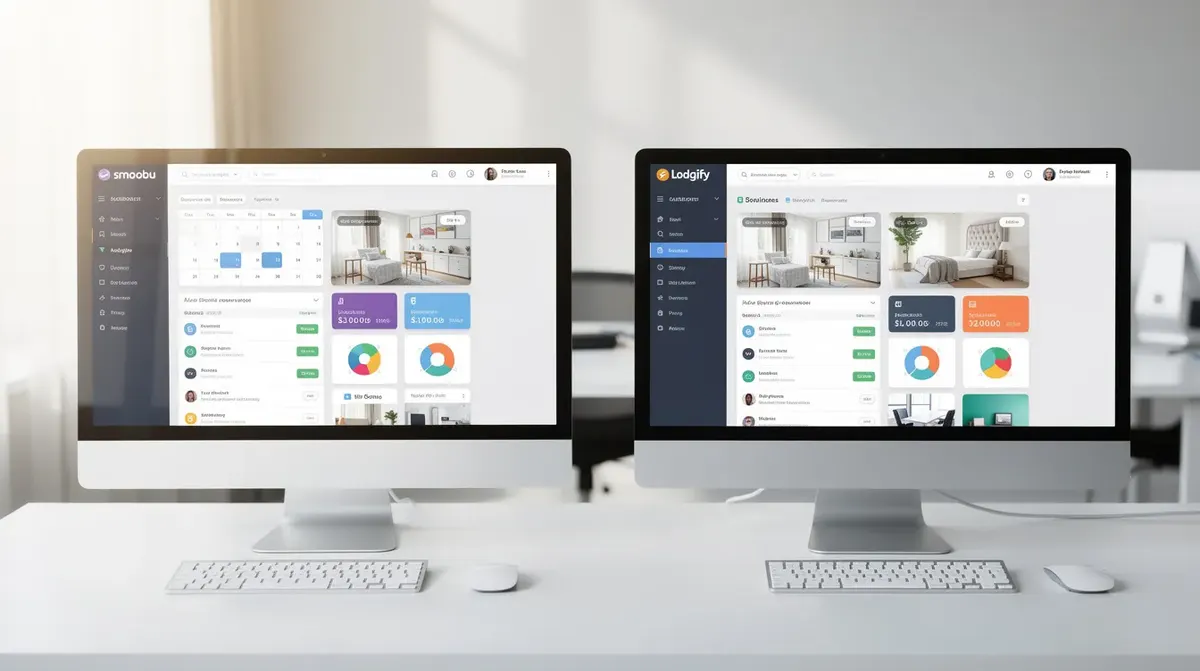
Head-to-head comparison: Smoobu vs Lodgify (2026)
Both Smoobu and Lodgify are vacation rental PMS platforms (property management systems for short-term rentals) designed for short-term rentals, but the main difference surfaces quickly once you look beyond the basics. Here's how they stack up as of July 2026:
Feature | Smoobu | Lodgify |
|---|---|---|
Starting price | Professional Prepaid: €31.50/mo (no booking fee); Professional Flex: €29/mo + 0.9% booking fee | Starter: from $16/mo + 1.9% booking fee; Professional plan: from $40/mo (0% booking fee) |
Free trial | 14-day free trial, no credit card required | 7-day free trial |
Channel management | 100+ channels; syncs rates & availability only | Full content sync (photos, descriptions, amenities) via API to major OTAs |
Direct booking website builder | Functional templates, custom domain, limited customization | Drag-and-drop customizable templates, SEO tools, Google Vacation Rentals integration |
Booking widget | Booking widget for any CMS integration | Advanced booking widgets with integrated payment processing |
Dynamic pricing | €12.99/mo per property add-on; Conservative/Recommended/Aggressive modes | 0.8% of total booking amount when activated; algorithmic market-based adjustments |
Automation tools | Basic automation focused on reservation management | Advanced automation workflows for guest messaging, task management, payment reminders |
Guest communication | Unified inbox, automated check-in instructions | Unified inbox, custom messaging workflows, automated sequences |
Customer support | Mon–Fri, 9:00–18:00 CET; 7 languages | 24/7 support via phone, chat, email; 5 languages; response times vary by tier |
Integrations | ~40 partner integrations; smart locks, payment processors | 1,000+ apps via Zapier; API access; broader ecosystem |
Mobile app | Rated 2.0 stars on App Store | Higher-rated mobile experience |
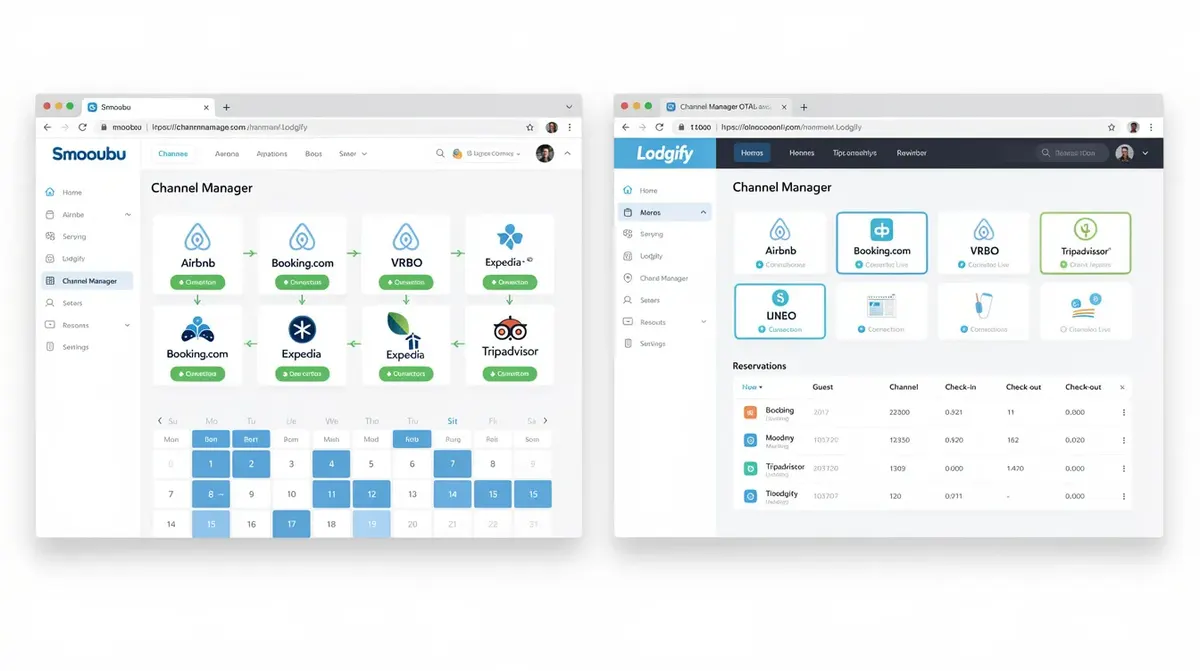
Both systems utilize subscription pricing that varies based on property count and feature level. Smoobu's pricing model is more straightforward and generally more affordable for small operators, while Lodgify offers deeper built-in features at higher price points.
Total first-year costs for 2 properties
Cost matters most when you're starting out. Here's what vacation rental owners actually pay in year one with two units, using current pricing as of July 2026:
Smoobu (2 units - Professional Prepaid)
Cost component | Annual amount |
|---|---|
Base subscription (1st unit) | €378 (€31.50 × 12) |
2nd unit add-on | ~€115 |
Dynamic pricing add-on (2 units) | €312 (€12.99 × 2 × 12) |
Booking fee | 0% |
Total first-year cost | ~€805 |
Lodgify (2 units - Professional plan) |
Cost component | Annual amount |
|---|---|
Base subscription (2 units) | ~$1,008 ($42 × 2 × 12) |
Dynamic pricing fee | 0.8% of booking revenue (variable) |
Booking fee | 0% on Professional plan |
Total first-year fixed cost | ~$1,008 + variable dynamic pricing |
Smoobu wins on raw subscription cost - approximately €200+ less annually for small hosts running two properties. But the comparison shifts when you factor in revenue impact. If two properties generate €30,000 via OTAs per year and Lodgify's direct booking tools help you capture even 30% of that revenue commission-free, you'd save roughly €1,350 in OTA fees - more than offsetting the higher subscription. |
For vacation rental owners with low volume or minimal direct booking ambition, Smoobu's flat cost structure delivers better value. For hosts treating rentals as a growing business, Lodgify's higher investment can pay for itself.
Booking website quality and direct bookings
Website builder capabilities directly impact your commission-free booking potential. This is where the lodgify vs smoobu comparison produces the clearest winner.
Smoobu's booking website approach
Smoobu includes a functional website builder but offers fewer customization options than Lodgify. You get basic templates, custom domain support, and a booking widget for any CMS integration. The digital guest guide adds a nice touch for guest experience.
Smoobu's booking website is functional but less polished than Lodgify's. SEO capabilities exist but are lighter - you won't find the deep meta-tag control or URL slug editing that property managers focused on search visibility need. Smoobu provides fewer options for website personalization, which means your direct booking site may look similar to other hosts using the same templates.
For hosts who view their website as a simple landing page rather than a conversion engine, Smoobu offers enough.
Lodgify's website builder advantage
Lodgify offers a robust website builder with SEO tools that vacation rental software competitors struggle to match. The platform provides customizable templates for booking websites, and Lodgify's website builder allows creation in under five minutes with drag-and-drop editing.
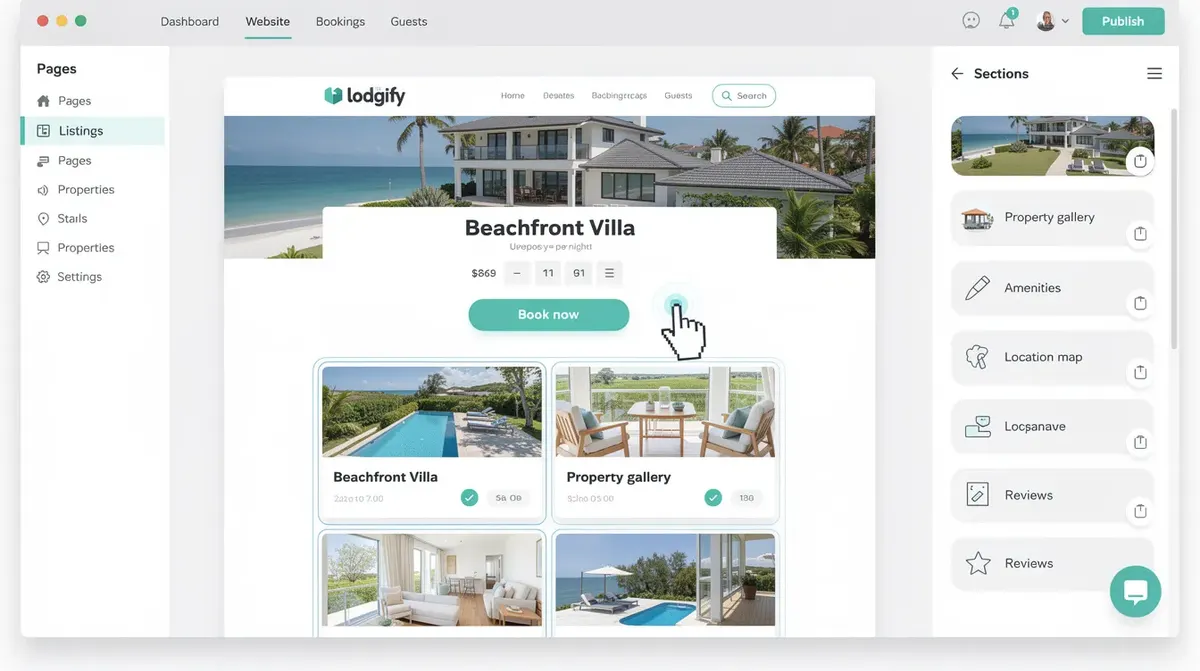
Lodgify's websites are optimized for SEO to enhance visibility - you can edit meta titles, meta descriptions, URL slugs, and benefit from fast-loading responsive designs. The platform also integrates with Google Vacation Rentals for free listings, giving your properties additional discovery beyond traditional OTAs.
Lodgify stands as the stronger choice for direct bookings. If reducing OTA commissions is part of your business strategy, Lodgify's direct booking website builder creates a meaningful revenue channel that Smoobu's simpler option cannot match.
Automation and daily operations
Automation depth affects your daily workload and guest experience quality. Both systems feature automated guest communication tools, but the sophistication differs considerably.
Smoobu's operational approach
Smoobu provides basic automation focused on reservation management. You get a unified inbox for guest communication, automated check-in instructions, payment reminders, and basic cleaning task coordination. The platform also includes a digital guest guide and online check-in functionality.
Smoobu focuses on simplicity, ease of use, and cost-effectiveness for smaller portfolios. Its automation tools are simpler and less customizable than Lodgify's, but they cover the essentials that independent hosts with one or two properties actually need daily.
Smoobu offers a user friendly platform where property owners can manage operations without a steep learning curve. If you prefer straightforward workflows over advanced automation, this approach saves time during setup.
Lodgify's automation capabilities
Lodgify offers advanced automation workflows for guest messaging that go well beyond basic templates. The platform supports automated payment reminders and task management, with operational customization options that let you build multi-step sequences triggered by booking events.
Lodgify features built-in automation and task management on higher-tier plans - the Ultimate plan includes cleaning and task management, owner reports, and advanced analytics. Lodgify provides better operational visibility and advanced reporting tools compared to Smoobu, making it suitable for property managers coordinating teams across multiple listings.
Lodgify's automation includes operational customization options that scale with your business. As your portfolio grows, you add workflows rather than replacing your entire system.
Integrations and scalability planning
Integration options determine how well your vacation rental PMS adapts as your hosting business grows.
Smoobu's integration ecosystem
Smoobu connects with approximately 40 partner integrations covering essentials: dynamic pricing, smart locks, accounting tools, and payment processors like Stripe and PayPal. The setup process is straightforward with key partners.
However, Smoobu has fewer niche integrations compared to Lodgify. Property managers with more than roughly 10 units may begin hitting limitations - particularly around user permissions, content sync, and team coordination features. Smoobu's channel manager syncs rates and availability but not property content, meaning photos and descriptions require manual updates on each OTA extranet.
For hosts maintaining simple operations across a small number of rentals, Smoobu's integration set is sufficient.
Lodgify's expansion capabilities
Lodgify supports integrations with over 1,000 apps via Zapier and provides API access for custom integrations. Lodgify provides broader integration options for dynamic pricing tools, marketing platforms, and operational software.
Lodgify supports two-way synchronization with major OTAs like Airbnb, including full content sync - photos, amenities, and descriptions push to connected channels via API. This eliminates the risk of inconsistent listings that can hurt your search ranking on platforms.
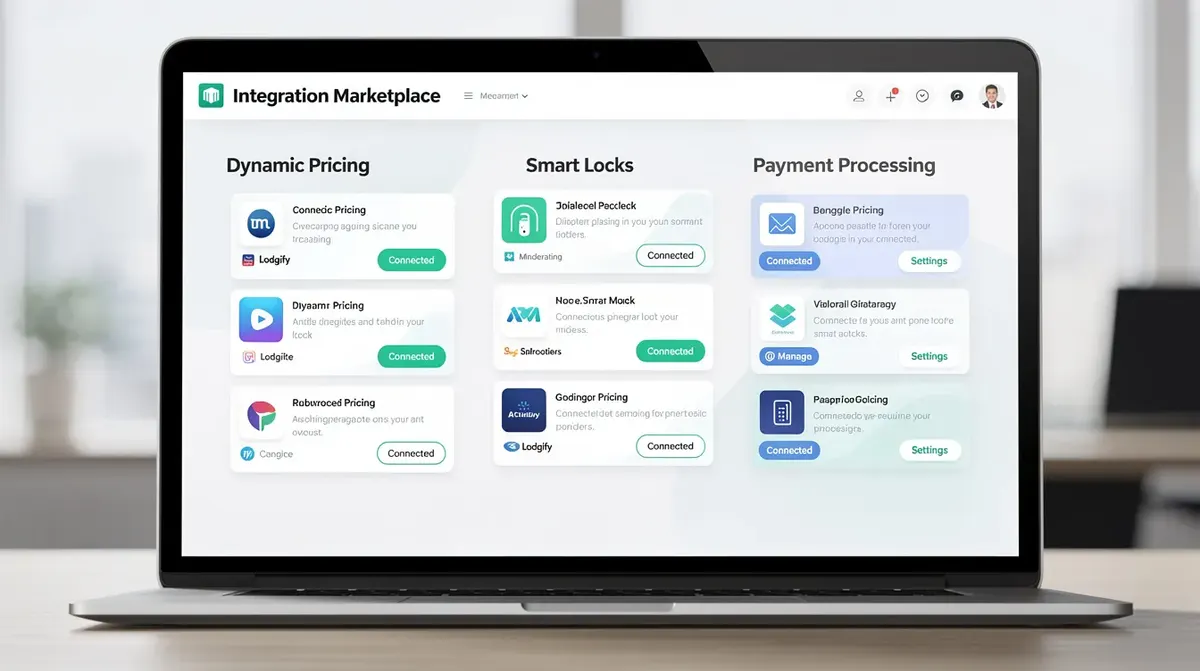
Lodgify is generally considered stronger for scaling businesses, branding, and direct bookings. Its partnership ecosystem supports business growth, with owner reporting, payment management, and cleaning coordination designed for hosts expecting portfolio expansion.
Support and onboarding experience
Setup quality and ongoing support affect your platform success and daily stress levels.
Smoobu's support approach
Smoobu provides a 14-day free trial for its services - the longest in this comparison and with no credit card required. This gives vacation rental owners genuine time to test channel management, the booking widget, and automation tools before committing.
Smoobu's customer support is available Monday to Friday only, from 9:00–13:00 and 14:00–18:00 CET. Weekend and holiday support is limited to ticket submission. The support team is available in seven languages, which covers most European hosts well. The streamlined setup process focuses on speed - most hosts report being operational within a day.
Lodgify's support experience
Lodgify offers a 7-day free trial for new users, shorter than Smoobu's but with guided setup assistance on higher plans. Lodgify offers 24/7 customer support via phone, chat, and email, though phone and live chat access are reserved for Professional and Ultimate plans respectively.
Lodgify provides support in five languages. Lodgify's response times vary by region and subscription tier - hosts on the Starter plan may experience longer waits. The learning curve is steeper due to feature depth, but the Lodgify Academy and detailed onboarding materials compensate for this.
For hosts who value after-hours access and phone support, Lodgify's Professional plan delivers. For those comfortable with self-service and European business hours, Smoobu's longer trial and documentation-first approach works.
Choose Smoobu if…
You manage 1–2 properties and want predictable monthly costs under €35 with transparent pricing
Direct bookings aren't a priority and you're comfortable with OTA commissions as your primary revenue channel
You prefer simple workflows over advanced automation and want to be operational within a day
You want faster setup without extensive customization - Smoobu offers a user friendly platform for straightforward property management
You're testing short-term rental hosting before making a major investment in vacation rental software
A 14-day free trial with no credit card matters more to you than feature depth
Choose Lodgify if…
You want a professional booking website to reduce OTA dependency - Lodgify's direct booking website builder is measurably superior
You're planning to grow beyond 3 properties within 2 years and need a platform that scales without migration
Direct booking conversion and guest experience matter to your business model
You need advanced automation for team coordination, guest communication, and task management across multiple listings
You want to build a recognizable vacation rental brand with SEO-optimized pages and Google Vacation Rentals exposure
Integration breadth matters - connecting with 1,000+ apps gives you flexibility as operations become more complex
What about a third option?
Neither Smoobu nor Lodgify fits every hosting style. Guesty and Hostaway serve larger property managers with 10+ units and need enterprise-grade operations. OwnerRez offers middle-ground pricing with strong channel management for hosts who find Smoobu too basic but Lodgify too website-focused. Hostfully emphasizes guest experience automation with digital guidebooks. Consider these alternatives if neither Smoobu's simplicity nor Lodgify's website focus matches your priorities.