
Guide · updated July 2026
Airbnb Direct Booking Website: When It's Worth It and How to Start
A direct booking website in 2026: when it's worth it, how to start, and the tools that build one so you keep the whole payout.
Key Takeaways
A direct booking website works best as a complement to Airbnb, not a substitute. Most successful hosts run both channels simultaneously and use a channel manager to keep everything in sync.
In a realistic scenario of 10 bookings per month at $220 (prices checked July 2026)/night, moving just 3 bookings to your own site can net you roughly $220/month in saved commission fees after accounting for payment processing, website costs, and maintenance.
Direct bookings average $1,935 compared to $906 on Airbnb, partly because returning guests tend to book longer stays and spend more per trip.
Going direct means losing Airbnb's built-in traffic, AirCover protections, and dispute mediation. Your own site has to earn trust through professional design, clear policies, and guest reviews.
The practical starting point: build a simple one-property site, promote it to past guests via post-stay emails and in-property QR codes, and validate demand before scaling your marketing spend.
The essentials: what an Airbnb direct booking website actually is
When we talk about "direct booking" in the Airbnb context, we mean guests booking through your own website instead of through an online travel agency, while your Airbnb listing stays live and active. You keep your OTA presence for discovery and run your own site for relationships.
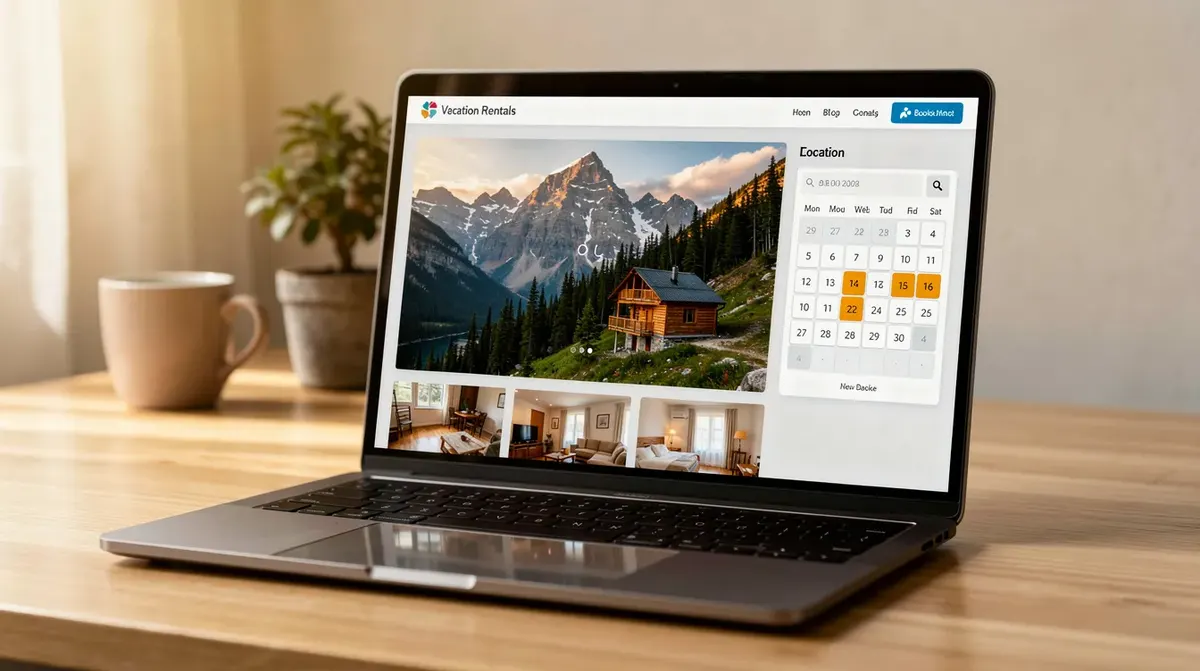
A direct booking site for a vacation rental is a standalone website with property photos, descriptions, clear house rules, an availability calendar, pricing, and a booking engine that accepts secure card payments. It's a professional operation, not a WhatsApp thread or a bank transfer arrangement. Without a proper booking system, you lose automated receipts, tax compliance tools, and fraud protection.
By 2026, many property owners use direct booking websites alongside OTAs for increased visibility, and 60% of property managers are exploring direct booking options. The typical channel mix includes Airbnb, at least one other booking platform like Vrbo or Booking.com, and a direct site connected through a property management system. Whether you're running a single urban apartment or a portfolio of five cabins in a mountain destination, the principle is the same: diversify where your vacation rental bookings come from.
The real math: when a direct site actually makes more money
Let's walk through a concrete example using 2026 numbers for an Airbnb-style city apartment.
Baseline scenario: all bookings on Airbnb
Assumption | Value |
|---|---|
Bookings per month | 10 |
Average stay | 4 nights |
Nightly rate | $220 |
Monthly gross booking value | $8,800 |
Under Airbnb's simplified fee structure, hosts using property management software typically pay about 15.5% of the gross booking value. That's roughly $1,364/month going to Airbnb. Under the older split-fee model, Airbnb charges hosts approximately 3% per booking while guests pay around 14% in service fees, meaning the total platform fees burden is still 15–18% of the booking value.
Scenario 1: move 3 of 10 bookings direct
Direct revenue: 3 × 4 nights × $220 = $2,640
Airbnb fees avoided: 15.5% × $2,640 ≈ $409
Stripe payment processing costs (2.9% + $0.30 per booking): ~$77
Website and tooling costs: ~$80–100/month
Net monthly savings: ~$220
Direct bookings can save both parties OTA commission fees since you're not paying platform fees and guests aren't paying booking fees.
Scenario 2: move 5 of 10 bookings direct, with longer stays
Repeat guests and family groups often stay longer when booking direct. Direct bookings can increase average length of stay to 5.9 days compared to the typical 4-night OTA stay.
Direct revenue: 5 × 5 nights × $220 = $5,500
Airbnb fees avoided: ~$852
Stripe + tooling + maintenance: ~$317
Net monthly savings: ~$535
Direct booking websites can reduce commission fees by 15%-20% on every reservation. And here's the number that matters most: direct bookings average $1,935 compared to $906 on Airbnb, which means direct bookings average $1,029 more per reservation than Airbnb. Direct bookings can also lead to longer average stays of 5.9 days. Direct booking websites allow property owners to bypass platform fees entirely.
Break-even point
Even a single direct booking per month (4 nights × $220 = $880) saves about $136 in Airbnb fees, minus ~$26 in Stripe costs, yielding $110. That covers most basic website costs. The compounding effect is where the real money lives: once repeat customers return year after year at zero OTA commission, your direct revenue grows without proportional cost increases.
What you lose when guests book direct (and why it matters)
Let's be honest. Airbnb delivers real value, and pretending otherwise will cost you.
Traffic and discovery
Airbnb has millions of active listings and handles the marketing that brings travelers to your door. Your own website starts with zero organic search traffic. You have to earn every visitor through SEO, social media, paid ads, and word of mouth. SEO drives 31% of website traffic in the travel industry, but building that takes months.
Protections and insurance
AirCover provides host damage protection, guest identity verification, and dispute mediation. When guests book on your direct site, none of that applies. You need your own insurance, a signed rental agreement, security deposits, and documentation practices to protect yourself.
Guest trust
Many first-time guests feel safer on a known third party platform. Your direct booking site needs professional design, visible guest reviews, transparent cancellation policies, and a secure payment gateway to overcome that hesitation. Airbnb only shares limited guest information with hosts, but it does provide a trust layer that takes work to replicate.
Chargebacks and disputes
On Airbnb, the platform handles payment disputes. On your own site, you manage chargebacks through your payment processor. You need solid records: messages, check-in photos, signed agreements, and guest screening documentation.
The realistic positioning
A direct booking website is an excellent channel mainly for repeat guests, referrals, and guests who already discovered you via Airbnb or Google. It's not where cold traffic converts easily. That said, direct communication with hosts can enhance guest experiences during stays, which builds the loyalty that feeds your direct channel over time.
What a direct booking website gives you that Airbnb never will
Airbnb handles first-time discovery. Your own website handles the relationship. They're complementary, and each does something the other can't.
Margin control
Direct bookings allow full control over pricing and policies. You set nightly rates, cleaning fees, promotional offers, and seasonal pricing without OTA constraints. You can offer guests a small discount for booking direct, passing some of your commission savings back to them.
Guest data ownership
Direct booking sites allow hosts to capture full guest data: real email addresses, phone numbers, stay preferences, and booking history. Hosts can market directly to guests with their own data through segmented email campaigns. Owning guest data helps in personalized marketing efforts like "return next summer and save 10%." Airbnb never gives you this.
Policy flexibility
Direct booking can lead to more flexible cancellation policies compared to OTAs. You can customize minimum stays by season, create pet-friendly tiers, set damage deposits that make sense for your property, and adapt house rules for high-demand dates.
Brand building
Hosts can offer customized branding on their websites not allowed on OTA listings. Building a direct booking website can enhance brand recognition over time. Guests booking directly may benefit from personalized services and local recommendations, like a welcome basket for returning families or a curated restaurant guide for anniversary trips.
Reduced platform dependency
Using a direct booking website can reduce reliance on single platforms like Airbnb. If Airbnb changes its algorithm, fee structure, or policies tomorrow, your direct booking channel keeps generating revenue regardless. Direct bookings can increase guest loyalty and repeat visits, turning happy guests into loyal guests who come back without you paying a cent in commission.
Tech choices: three main ways to build your Airbnb direct booking website
You don't need to become a developer. Direct booking websites can be set up without coding skills. There are three main paths, each with clear trade-offs.
All-in-one vacation rental website builders
Platforms like Lodgify, OwnerRez, and Uplisting are vacation rental website builders that bundle a direct booking website builder, booking engine, channel manager, and payment processing in one package. Costs range from $12–40/month for a single property. Best for: hosts with 1–5 listings who want a turnkey solution with minimal setup time.
WordPress + booking plugin
WordPress can be customized with booking plugins like MotoPress Hotel Booking for full control over design, content, and SEO. You get access to the entire WordPress ecosystem, but you'll need hosting ($10–30/month), a domain, SSL, and ongoing plugin updates. Additionally, Squarespace and Wix allow custom booking tool integrations, while Shopify can integrate booking apps like ShopSTR for rentals. Best for: hosts with some technical comfort who want more control over their property description, content marketing, and long-term SEO.
Custom or agency-built site
A custom website offers the highest flexibility and bespoke brand design. Expect upfront costs of $3,500–$10,000+ and ongoing retainers of $300–$500/month for SEO, content, and tech support. Best for: property managers with 10+ units and a serious vacation rental business that justifies the investment.
2026 must-haves regardless of path: mobile-first responsive design, SSL and PCI compliance, fast hosting with strong core web vitals, high-resolution images (essential for a high-converting booking site), and channel manager integration to avoid double bookings.
How to build it: step-by-step from zero to live site
Here's a practical checklist to go from "Airbnb only" to "Airbnb plus a working direct site" in under a week.
Step 1: Choose a brandable domain.
Pick something memorable on your own domain (e.g., yourcabininbreckenridge.com). Register it and connect it to your website builder or WordPress host. Enable SSL immediately.Step 2: Set up core pages.
Homepage, individual property pages with your booking calendar, an "About" section, FAQ, and a clearly visible "Book Direct" button on every page. Add a booking widget where guests can check availability instantly.Step 3: Integrate the booking engine.
Configure nightly rates consistent with your Airbnb pricing strategy, add minimum stays, taxes, and extra fees. Connect Stripe or a similar secure payment gateway for card processing.Step 4: Import and improve content.
Start with your Airbnb photos, descriptions, and amenities. Then enrich them: add local area guides, richer storytelling about the guest experience, and clear check in instructions. High-resolution images make a measurable difference in conversion.Step 5: Pre-launch checklist.
Test a dummy booking end-to-end. Verify mobile responsiveness, page speed, email confirmations, and legal pages (terms of service, privacy policy, rental agreement).
Payments, protection, and policies on your own site
When guests book on your own site, you're the payment processor and the policy-maker. Here's how to set that up properly.
Payment processing
In 2026, payment processing typically means Stripe (2.9% + $0.30 per domestic transaction) or similar gateways. For international cards, expect an additional 1–2%. ACH transfers are cheaper (~0.8%) but less practical for most guests. 3D Secure and SCA compliance help reduce fraud and chargebacks.
Payment structure choices
Full prepayment at booking (simplest, best cash flow)
Deposit + balance due before arrival (more guest-friendly)
Damage deposit or pre-authorization via Stripe (protects against property damage)
Cancellation policies
Cancellation policies should be clear and guest-friendly while protecting you. Example: 30-day strict cancellation for peak season, flexible policies for midweek off-season. Write them in plain language and display them prominently to reduce last minute cancellations.
Legal protection
Legal protection means a signed rental agreement or click-to-accept terms covering occupancy limits, noise, pets, parties, and local regulations. Airbnb won't mediate disputes on direct bookings, so your documentation is your defense.
Guest screening tools
For higher-value properties, integrating guest screening tools can enhance security for direct bookings. Services like Superhog-style solutions offer ID verification and financial protection that partially replace Airbnb's safety net.
Getting your first direct guests without quitting Airbnb
Keep Airbnb fully active. Your first direct bookings will come from people who already know you.
Leverage past guests
After checkout, send a thank-you email (through allowed channels, post-stay) with a link to your direct booking site and a modest incentive. Email marketing can boost direct bookings by targeting past guests with personalized offers. Offering direct booking discounts can increase guest loyalty. Even a 5–8% savings vs. Airbnb pricing is compelling.
Use physical assets
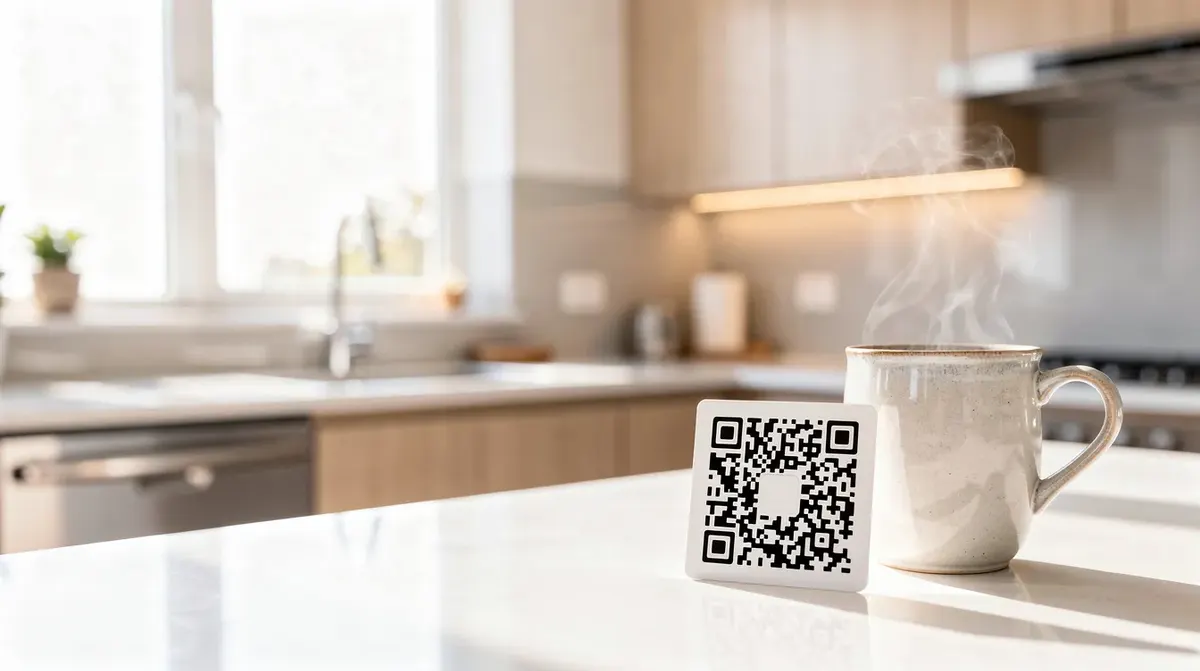
Place QR codes on in-property signage, fridge magnets, and welcome cards that point to your booking website. Include a simple message: "Book direct next time and save." This is your lowest-cost, highest-conversion marketing channel for repeat business.
Social media
Update Instagram and Facebook bios to link directly to your booking site. Post reels and guest stories showcasing the property with a "book direct via the link in bio" call-to-action. This helps drive traffic from potential guests who follow you.
Collect emails ethically
Wi-Fi splash pages, digital house manuals, and check-in forms that ask permission to share future offers. Build your list of repeat customers gradually and send seasonal promotions.
Realistic timeline: expect your first 1–3 direct bookings within a few months. Direct bookings increased by 35% in 2024, signaling growing guest comfort with booking direct. And 67% of travelers prefer booking directly on a brand's website when given the option. The demand is there; you just need to make it easy.
Marketing your direct booking site beyond repeat guests
Once you have a few repeat bookings flowing, it's time for phase two: attracting more guests who have never stayed with you.
Local SEO
Optimize meta titles and on-page copy for phrases like "family-friendly vacation rental in [city]" and ensure you're listed on Google Business Profile and google vacation rentals. SEO optimization can improve visibility for direct booking websites and help your site ranks for high intent traffic over time. This is how your organic search presence compounds.
Content marketing
Publish short local guides, event calendars, and blog posts answering common traveler questions. This improves search relevance and gives potential guests a reason to visit your site even before they're ready to book.
Paid ads (small scale)
Run retargeting campaigns for people who visited your direct site but didn't book. Simple Meta ads targeting drive-to markets in your region can be surprisingly cost-effective. Track cost per acquisition vs. your Airbnb commission fees to ensure you're coming out ahead. Even modest paid ads can offer discounts to guests and pull them into your booking flow.
Partnerships
Collaborate with local wedding venues, tour operators, or conference organizers who can refer guests to your direct booking site. Get listed in local tourism directories and listing sites.
Tracking
Use UTM links and basic analytics to see which channels deliver bookings. Double down on what works and cut what doesn't.
Running Airbnb and your direct site together without losing your mind
The fear of double bookings and admin overload is real, but solvable.
A channel manager syncs calendars to prevent double bookings across Airbnb, other OTAs, and your direct site. When someone books on any platform, all other booking channels are blocked automatically. Automated calendar management eliminates manual updates and errors. Hosts using channel managers can manage multiple platforms from one dashboard, seeing all reservations in a central calendar.
Many modern PMS tools bundle a channel manager, direct booking engine, and guest communication inbox in one system. This means you can manage your entire short term rental business from a single interface, even with a small portfolio.
Workflow tips:
Centralize guest communication in your PMS inbox
Use templates for check in instructions and house rules
Automate confirmation and reminder emails for both Airbnb and direct guests
Keep rate parity across channels or offer guests a slightly better deal on direct (e.g., free early check-in rather than an obvious price cut)
The goal isn't OTA independence overnight. It's a balanced mix where direct bookings gradually reach 20–40% of total bookings over a couple of years.
Risks, myths, and when a direct booking site is not worth it (yet)
A direct booking website is not automatically a good investment for every Airbnb host.
It's probably too early if:
You're getting under 3–5 bookings per month
You have no repeat guests or referral potential
Your listing is highly seasonal with dead months that can't support website and marketing costs
You're not willing to handle extra admin, payment processing, and guest screening
Myths to debunk:
Having a direct site will not hurt your Airbnb ranking. Airbnb's algorithm uses internal performance metrics (ratings, response time, cancellations), not off-platform activity.
You don't have to choose between Airbnb and your own website. Most hosts run both.
A new direct site won't suddenly replace Airbnb traffic. It's a medium-term asset that pays off over 12–24 months.
Simple diagnostic: if guests are already asking "can we book with you directly next time?" and you're frustrated about commission fees eating into your margins, it's time. Start with a simple one-property site, validate with a few direct bookings, and scale once the numbers justify it. Many property managers treat this as a phased approach, and that's the smart play for your short term rental business.