

Review · updated July 2026
Hostaway review (2026): who it's for - and who should skip it
Hostaway is our pick for large portfolios & teams. Scalable PMS and channel manager aimed at growing managers with 20+ units and teams. Skip it if you run one or two listings — pricing and onboarding assume a growing portfolio.
No partner program — we earn nothing if you sign up. We still tested it, and if you want the closest tool we do partner with, that's Uplisting.
Hostaway is a vacation rental management platform designed for professional property managers, not casual hosts dabbling with a spare room. This hostaway review breaks down exactly where the software excels, where it falls short, and whether it deserves a spot in your tech stack in 2026.
Key Takeaways
Hostaway is our recommendation for property managers running 20–500+ units who need robust channel management, team workflows, and owner statements with trust accounting via integrations.
Hostaway pricing is quote-based in 2026, typically ranging from $25 (prices checked July 2026) to $50 per listing monthly depending on volume, features, and contract terms - with add-ons that can push costs higher.
The main limitations: a dated user interface with a real learning curve, weeks-long onboarding for complex setups, and extra hostaway fees for dynamic pricing, booking engine usage, and SMS messaging.
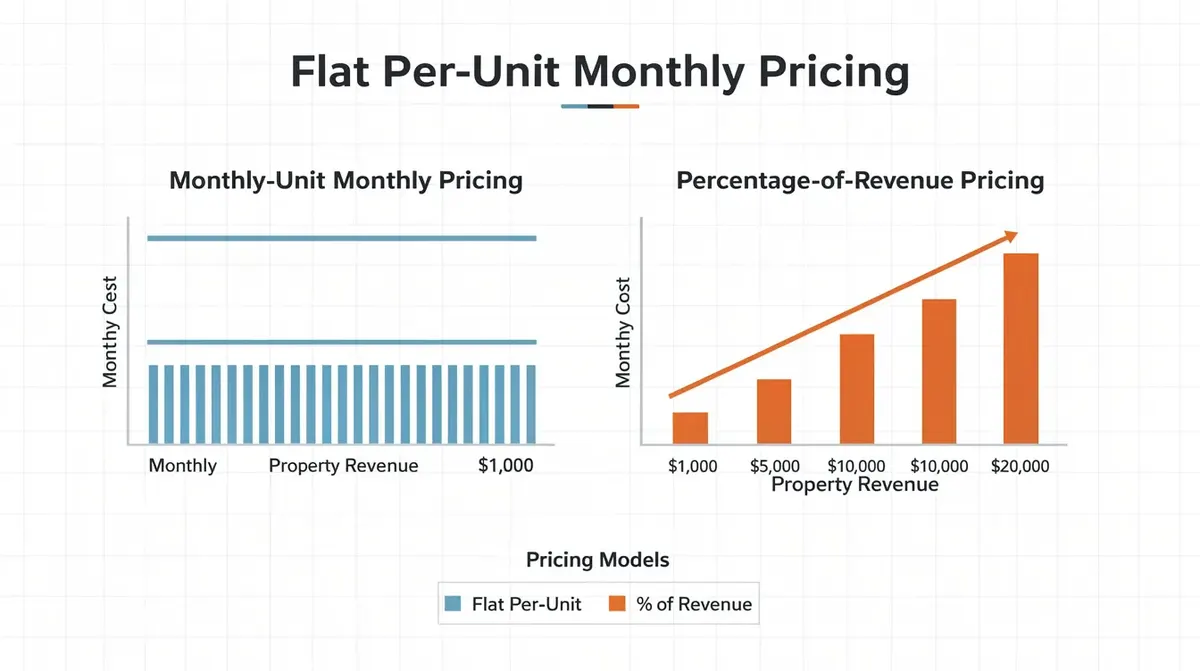
Compared to Guesty, Hostaway offers more predictable per-listing pricing than Guesty's percentage-of-revenue model, but trails in UI polish and owner portal experience.
No partner program - we earn nothing if you sign up.
What is Hostaway?
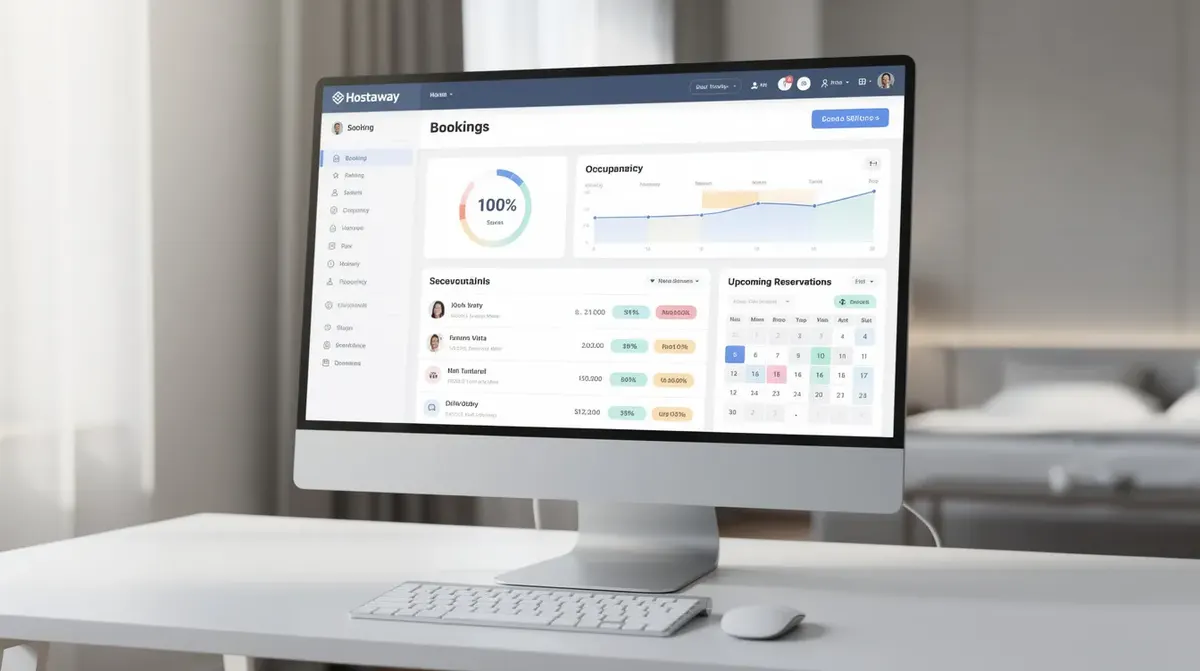
Hostaway is an all-in-one property management software built for professional managers, not individual hosts. It combines a PMS with an official channel manager offering 2-way API connections to major sales channels - Airbnb, Vrbo, Booking.com, Expedia, and Google Vacation Rentals, among others.
Core modules include a unified inbox, booking engine, owner portal, basic CRM, task scheduling, dynamic pricing, and financial reporting dashboards. In 2026, the company claims over 10,000 managers worldwide use the platform, with the sweet spot being portfolios of 20 to 500+ listings that need multi-team collaboration. The solution is cloud-based and browser-first, with mobile apps available for inbox and dashboard views - though deeper workflows like financials and setup run better on desktop.
The essentials: our verdict
If you're a busy manager comparing tools and want the short version, here it is:
Who it's for: Teams managing 20+ vacation rental units across multiple properties, OTA platforms, and owners who need a comprehensive, scalable PMS and channel manager.
Biggest strengths: Robust 2-way API channel sync that prevents double bookings, deep automation (Hostaway automates 93% of repetitive guest communication), and advanced financial reporting and analytics for property managers.
Main deal-breakers: The UI feels dense and dated, onboarding takes weeks for complex setups, and quote-only pricing makes it harder to benchmark costs against competitors quickly.
If it's not for you: Very small hosts under 10–15 units will find lighter, cheaper tools on our hostaway alternatives page, and our pillar guide maps out the full landscape.
We recommend Hostaway as our top choice for managers with 20–100+ units who need enterprise-style reliability without a revenue-percentage commission model.
Hostaway at a glance (ratings, modules, and support)
This section gives an objective snapshot based on 2025–2026 public data and reviews.
Hostaway holds a rating of approximately 4.8 out of 5 on Capterra across 1,577 reviews, and roughly 4.8 out of 5 on G2 from 390 reviews. Customer support is rated 4.7 out of 5, and the company reports a 97%+ customer satisfaction rating. Ease of use scores tend to sit around 4.6 - slightly lower, which reflects the learning curve users mention.
Core modules:
Channel management with official 2-way API connections
Guest messaging automation and unified inbox
Task management and cleaning team coordination
Owner statements and basic trust accounting via integrations
Booking engine and website builder tools
Dynamic pricing with reported average revenue uplift of ~25.1% per listing
Support in 2026: Hostaway assigns dedicated onboarding specialists and offers live chat, email, and phone assistance. Hostaway offers 24/7 phone support for urgent issues. Hostaway is rated highly by users for its customer support and onboarding processes, though some reviews note occasional slower responses during peak seasons.
What we like about Hostaway
These advantages matter most if you're running 20–100+ units and need the platform to handle coordination at scale.
Channel management that actually prevents problems
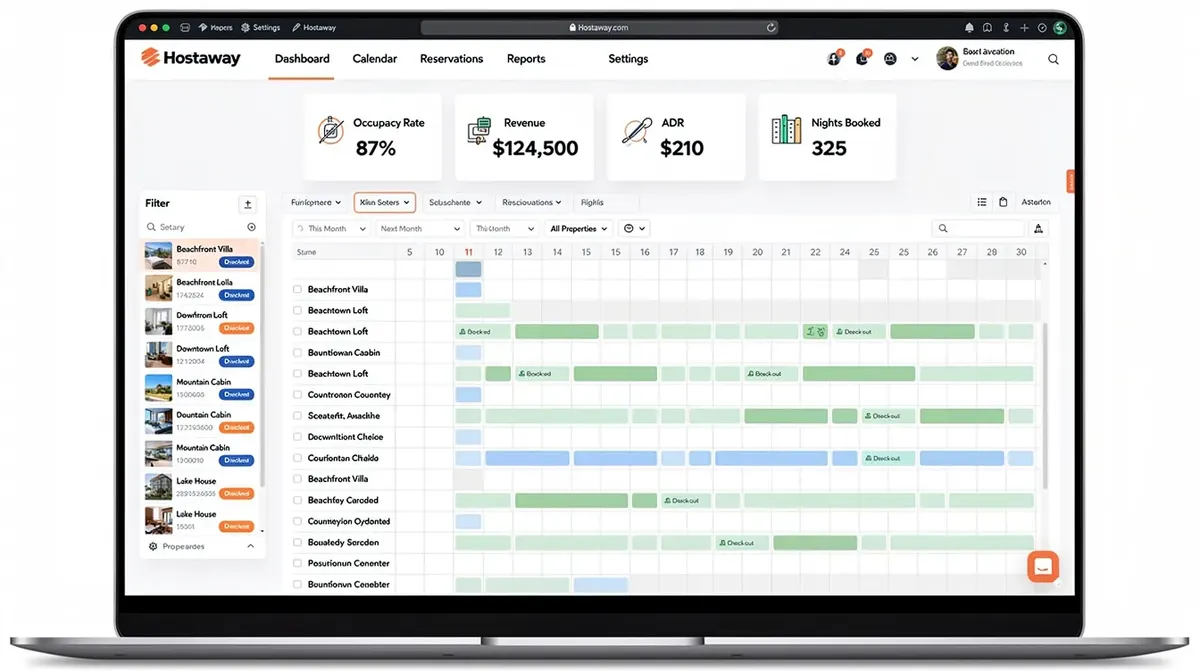
Hostaway supports 2-way API connections with major sales channels including Airbnb, Vrbo, Booking.com, Expedia, and Google Vacation Rentals.
Calendars sync in near real-time, which is the single most important safeguard against double bookings when you manage multiple properties across platforms.
One dashboard, one calendar - the entire process of rate and availability management stays centralized.
Automation depth that cuts labor per reservation
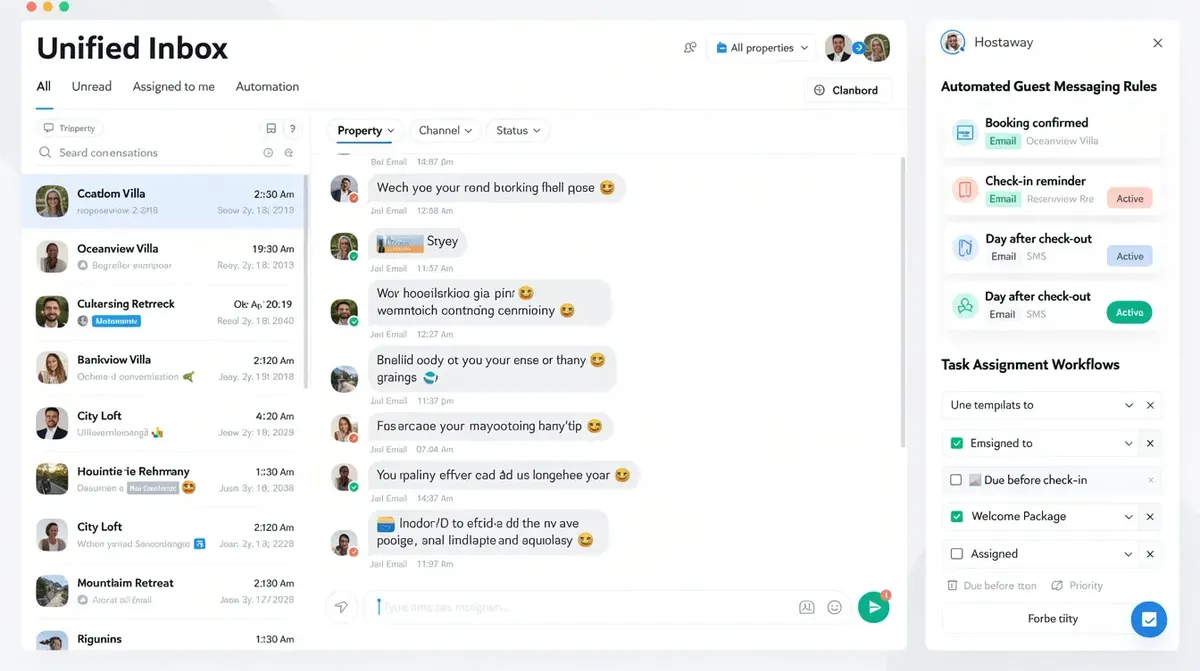
The unified inbox pulls guest communication from every connected channel into one view.
Templated and triggered messages handle confirmations, check-in instructions, and review requests via an event trigger system.
Task alerts for cleaning and maintenance teams are auto-assigned based on reservation events, so your cleaning team knows what to do without a phone call.
Financials that support professional trust accounting
The financials section includes owner statements, revenue and occupancy dashboards, and QuickBooks integration.
While full trust accounting still relies on other systems or specialist tools, the reporting foundation is strong enough for most mid-sized property management operations.
Hostaway offers advanced financial reporting and analytics for property managers handling complex owner splits.
Scalability without switching systems
Hostaway integrates with over 200 third-party tools - smart locks, dynamic pricing engines, insurance providers, payment processors, and accounting software.
Its open API means you can connect other systems as your business grows from 20 to 200+ properties without re-platforming.
What we don't like (real drawbacks)
These are issues we've seen repeatedly across 2024–2026 user accounts and reviews - not theoretical nitpicks.
The user interface feels dated
The platform is considered feature-rich, but has a learning curve for new users.
Options are buried in nested menus, screens can feel cluttered, and new staff take noticeably longer to become productive compared with newer, more modern SaaS tools.
If your team's main frustration with current software is visual design and simplicity, Hostaway may feel like a step sideways.
Onboarding and configuration demand patience
Complex setups - multi-owners, multiple tax jurisdictions, deep API integrations, and content mapping across channel managers - can take weeks before everything is stable.
This includes performing security verification steps, payment gateway configuration, and listing content sync.
Some users report that mapping and unmapping listings can reset markup settings, requiring re-work.
Native trust accounting has gaps
Hostaway handles owner statements and financial exports well, but full trust accounting compliance typically needs external tools or integrations.
That adds cost and complexity for managers who need to hold funds in trust, split cleaning fees, taxes, and owner commissions automatically.
Quote-based pricing creates opacity
Hostaway does not publish standard pricing plans and quotes are customized based on business size.
This makes it harder to benchmark hostaway pricing against competitors.
Some managers report surprise add-on fees when scaling units or enabling premium features.
Hostaway pricing and fees (2026)
Hostaway pricing is quote-based and depends on unit count, geography, and chosen modules. The table below gives realistic 2026 ranges drawn from user reports and third-party data - not an official price list.
Portfolio size | Estimated per-unit/month | Notes |
|---|---|---|
1–19 units | $40–$80+ | Higher per-unit cost; minimum contract may apply |
20–49 units | $30–$50 | Volume discount typical with annual agreement |
50–199 units | $25–$40 | Negotiable; add-ons priced separately |
200+ units | Custom quote | Significant discounts possible; dedicated account support |
Hostaway charges $25 to $50 per listing monthly at the core level, but the real price depends on what you layer on top. |
Hostaway fees managers often overlook:
Booking engine fee: 1.8% guest service fee on direct bookings made via Hostaway's booking engine (applied to base rate + fees, excluding taxes)
Dynamic pricing: Additional per-listing monthly charge beyond the base subscription
SMS / WhatsApp messaging: Incremental costs for high-volume or international automated texts
Payment processing: Stripe fees plus any Hostaway application fee on certain transaction types
Onboarding / implementation: For large portfolios, professional services or extended setup support may carry extra cost
Hostaway is often regarded as expensive relative to competitors, particularly for smaller operators. But Hostaway's pricing is fixed, unlike Guesty's commission model, and Hostaway's fixed pricing is cheaper for high-earning properties - especially urban units generating strong nightly revenue where a 3% cut would far exceed a flat monthly fee.
Who should choose Hostaway
Hostaway is our recommended option for managers running 20–100+ vacation rental units who want a long-term, scalable PMS and channel manager. Hostaway is recognized for its scalable features suitable for managing multiple properties.
Multi-city or multi-country operators with 2–10 staff users, multiple owners, and a mix of OTA and direct booking revenue. The platform's ability to centralize operations across regions is a wonderful advantage for growing portfolios.
Operationally mature teams that already use trust accounting, standard operating procedures, and dedicated cleaning teams, and are aware that a structured onboarding process takes dedication and time.
Tech-forward managers who value API access, marketplace integrations, and a booking engine they can layer on top of a custom marketing website to grow direct bookings over time.
No partner program - we earn nothing if you sign up.
Who should skip Hostaway
Hostaway is not a good fit for every portfolio size or strategy.
Solo hosts under 10–15 units. The quote-based pricing and implementation effort are overkill. Simpler, cheaper tools covered in our hostaway alternatives guide will save you money and setup time. These hosts should also check the pillar page for a broader view.
"Set and forget" expectations. If you want a plug-and-play app with minimal setup and don't plan to invest time into workflows, security verification processes, staff training, and automation configuration - you'll be waiting for results that never come.
Unusual business models. Managers needing niche features like mixed hostel/hotel inventory or long-term leases with complex rent schedules will find specialized PMSs a better fit in the future.
Teams that prioritize ultra-modern UX above all. If your staff's feedback about current tools centers on visual design and simplicity, very new SaaS entrants might feel more modern than Hostaway's interface.
Hostaway vs Guesty (and other alternatives)
Guesty is Hostaway's closest competitor at the 20–500 unit level. Hostaway is compared to Guesty in features and pricing regularly, and the choice often comes down to cost structure and operational priorities.
Hostaway vs Guesty in five lines:
Pricing: Hostaway charges a fixed per-unit fee. Guesty charges around 3% commission on sales for many Pro/Enterprise accounts - which gets expensive on high-revenue urban listings.
UI and owner portal: Guesty generally offers a more polished, modern interface and a more customizable owner portal experience.
Integrations: Both offer broad marketplace ecosystems; Hostaway integrates with over 200 tools, Guesty claims 60+ direct API channels.
Support: Both provide dedicated onboarding; Hostaway gets higher marks in recent reviews for responsive, extremely knowledgeable support staff.
Best fit: Hostaway suits managers wanting predictable costs and strong API. Guesty suits those comfortable paying a percentage for a more polished platform. Read our full Guesty review for the detailed breakdown.
Other alternatives:
Lodgify: Best for smaller portfolios (5–40 units) wanting transparent, published pricing and a strong direct booking website builder.
Hospitable.com: Best for hosts who prioritize absolutely amazing guest messaging automation and simplicity over deep financial reporting.
All these tools aim to centralize guest communication, booking engine, and owner reporting, but differ sharply in user interface, contract terms, and total cost of ownership.
How Hostaway handles direct bookings, owner portal, and security
Three areas managers always ask about before committing to a PMS - here's how Hostaway handles each.
Direct bookings: Hostaway's native website builder and embeddable booking engine let you take commission-free payments through Stripe. Rates and availability stay synced with OTA calendars automatically, so you can grow direct bookings without risking conflicts. The 1.8% guest service fee applies to bookings processed this way.
Owner portal: Owners can view their calendar, revenue summaries, guest reviews, and basic statements. Reports are helpful for transparency, though some managers note limitations in how much owners can customize their view or access specific data like lock codes. The portal is a professional tool, but not yet a comprehensive self-service page for every owner need.
Security: Hostaway uses encrypted connections, role-based permissions, and standard SaaS security practices to protect owner and guest data. The platform employs processes for performing security verification and logging access, with notifications when verification is successful. These measures help protect the account from unauthorized access and malicious bots. Each security service layer - from bot detection that verifies legitimate traffic (you may recognize a respond ray id in browser-level checks) to role-based user permissions - is designed to keep the platform safe.
Compliance: Payments are handled through PCI-compliant processors. Tax configuration, payment gateway setup, and refund handling vary by channel and region, which is a matter worth addressing early in onboarding to avoid re-work.
Real-world experience: workflow, user interface, and support quality
A typical day for a 50–100 unit manager on Hostaway starts in the multi-calendar view - checking arrivals, departures, and any gaps. From there, you move to the unified inbox to speak with guests, then to tasks to confirm cleaning assignments. The entire process is centralized, which is the core value proposition.
User interface in practice: Staff manage reservations, guest profiles, and tasks from one dashboard. The friction appears when navigating between views - click depth is real, terminology can be inconsistent, and cluttered screens slow down new team members. It's functional, not elegant.
Team workflows: Multiple logins share the unified inbox. Cleaning and maintenance tasks auto-assign based on reservation events. Check-in instructions send via templates. This scales well across 15–100+ units with proper setup, and clients generally speak positively about the operational efficiency once onboarding is complete.
Review automation and reputation: Hostaway allows for automated guest reviews through templated messages. Automated review requests help maintain high guest reviews across Airbnb, Vrbo, and direct channels. Consistent review automation answered one of the biggest challenges managers face - keeping OTA rankings high without manual effort.
Support quality: Support staff are described as fast and knowledgeable in the majority of reviews. Named representatives, excellent support during QuickBooks integration, and help with owner statement configuration are common themes. However, some users reported long hold times and dropped calls during peak season, and complex bugs sometimes require escalation to resolve issues fully. The company's dedication to improving response times is noted, but hold time during high season remains a known frustration. Hostaway offers 24/7 phone support for urgent issues, which helps when you need immediate assistance to connect with a live agent.